

The English electorate never cease to amaze me with their political choices and sheer stupidity, especially since they voted for Margaret Thatcher.
As Arthur Daley, the fictional artful dodger, famously said: “She was greatest salesperson ever – who sold the British public assets they already owned.”
This sentiment was reinforced by the Brexit referendum in 2016 and the lies and myths that led the UK to exit the European Union against its own interests. These two acts of national self-harm have left the UK struggling to economically recover.
The results of the English local government elections suggest that this stupidity trend has become an addiction.


While it’s important to take these results seriously, the prospect of a Reform government isn’t inevitable.
However, the threat of being governed by self-absorbed, money-grabbing charlatans and city wide boys has become a real possibility.
This is English nationalism on steroids, and it’s not a good omen for stability in Northern Ireland or the future of British-Irish relations.
The gains made by Reform are remarkable, especially considering that voters seem to have chosen a party and its candidates without much knowledge about either.
The electorate knows that Reform is not Labour or the Conservatives and seems content with that for now.
One concerning aspect is the large number of former Tories in Reform’s ranks. The adage “buyer beware” comes to mind, as this purchase might turn out to be a pig in a poke.
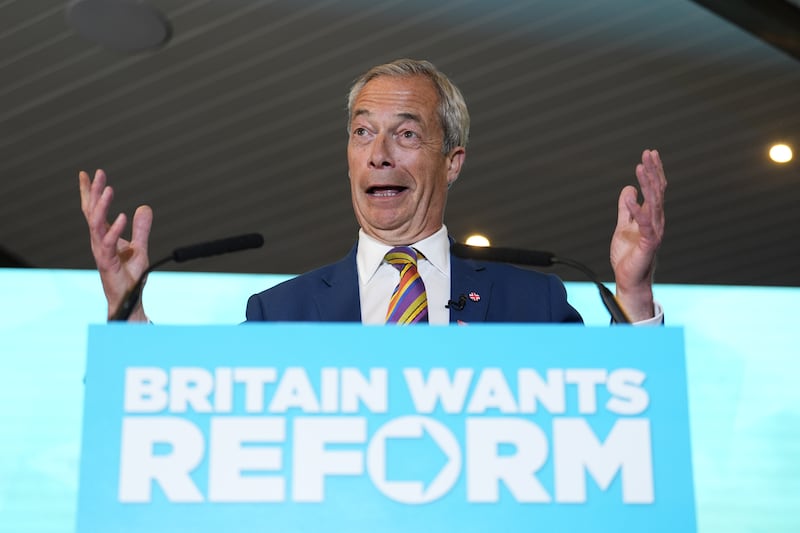
Ultimately, Reform is built around the very successful personality cult of Nigel Farage, which is its greatest strength and potentially its Achilles heel. Let’s not get carried away, though. Reform hasn’t exactly excelled in administering in the boroughs it took control of last year and these are only local government elections. A first-past-the-post system in a general election three years away could be very different.
Meanwhile, central government can ensure Reform-leaning boroughs receive insufficient funding over the next three years, making life difficult for inexperienced councillors.
Reform appeals to white English prejudices and xenophobia and has wide appeal to misogynists and bigots.
However, its support clearly extends beyond this base. A significant portion of the electorate is disillusioned and disappointed with the government’s lack of focus on domestic issues and the two-party system.
Kemi Badenoch, the seemingly perpetually scowling leader of the Conservatives, is discovering, as former leader William Hague did, that strong performances in the Commons don’t translate into voter support.
This was a very poor election for the Tories and the scale of its failure is only surpassed by the calamity facing Starmer and Labour.
When Boris Johnson, the clown prince, arrived in Westminster he brought the circus and while his act is over, the circus remains.
There’s no doubt this is a catastrophic election for Labour. It can’t be dismissed as mid-term blues. With the party defending 2,000 seats thanks to their triumph in the last local government elections, losses were inevitable.

This scale of defeat across Britain, particularly in Wales, is career-ending. It’s no longer a question of whether Sir Keir Starmer will resign, but when.
I write this as someone who believes any Labour government is preferable to the alternatives and someone who had high hopes for Keir Starmer.
There should be no knee-jerk reaction and he should remain prime minister until a replacement is found. A caretaker leader isn’t a viable option for a thorough overhaul of this government.
What I and others overlooked was that Starmer’s considerable intellectual skills are those of a technocrat; his instincts are those of a data analyst and the emotional intelligence needed to connect with people is that of a High Court judge. He arrived at Number 10 on a wave of hope but has since become hamstrung and hapless.
His insistence that he “would not walk away” but “took full responsibility for the election results”, sounded like a desperate plea for survival.
He must know, in his heart and mind, that he either goes in an orderly manner to maintain stability or creates chaos and civil war within Labour ahead of the conference in September.
His John Wayne at the Alamo act is unconvincing. Starmer’s solution to the electoral disaster is to reset his government again, listen to people more – again – and bring about change – again. He has undergone more resets in the past 15 months than Spurs have managers this season.
To date, he has been fortunate in his opposition. His main advantage lies in the instability caused by the Iran war and the lack of a credible alternative candidate. However, it’s unrealistic for Labour’s senior figures to allow the party and government to sink under a leader determined to go down with the ship.
British politics has finally caught up with the European model where broad coalitions are commonplace. It’s actually a positive development. These coalitions generally work well, though Stormont is a notable exception.
Whitehall mandarins will soon find themselves in a new landscape where their hegemony will be shattered.
Keir Starmer has discovered, like Neil Kinnock, Gordon Brown and even Theresa May, that being a decent person isn’t always enough in politics.
If you have an opinion on the issues raised in this article and would like to submit a Letter to the Editor to be considered for publication, please click here.
Letters to the Editor are invited on any subject. They should be authenticated with a full name, address and a daytime telephone number. Pen names are not allowed.