
Economists don’t often talk in terms of trust. We frequently reflect on confidence as a pre-requisite for growth and acknowledge the importance of Government credibility in terms of business sentiment and financial market expectations.
Yet, both confidence and credibility are rooted in trust.
Levels of trust have been increasingly eroded over recent years, since the 2008 financial crash and post Brexit. Irrespective of political opinion on the latter – whether of the view that it was ill-advised, or rather inadequately implemented – many people have felt a sense of betrayal since. This has been associated with increased mistrust in government, amongst countries and both between and within communities.
A myriad of additional global factors have further undermined trust and social capital across the globe - rising geo-political tensions, the fallout from Covid-19, tariffs, subsequent tariff u-turns and political scandals. This has been accompanied by a growing pattern of short-lived, unstable governments and the rise of populist and authoritarian politics.


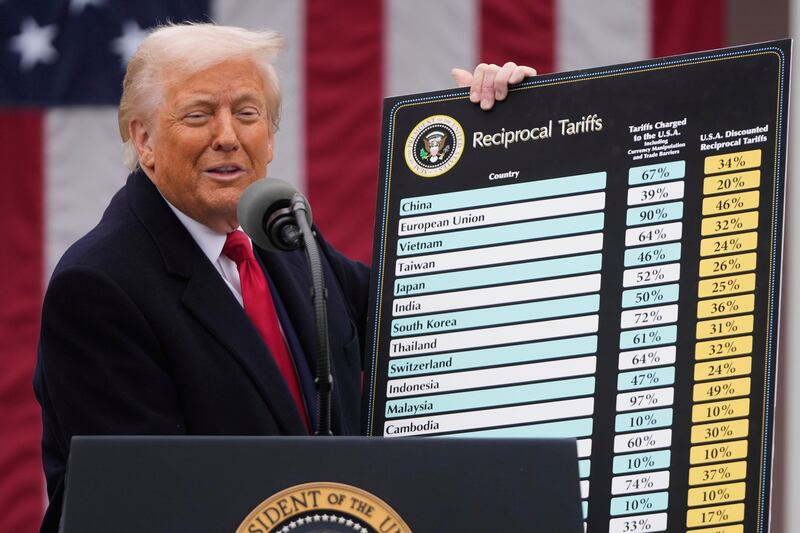
It shouldn’t then be a surprise that we are witnessing a deficit of economic growth and record levels of public debt in many parts of the world, not to mention acute societal problems.
A relative absence of trust is proving costly.
It is in this context of stagnant growth and inflated public debt that the UK Chancellor has recently indicated a financial necessity to increase tax in her forthcoming Budget, something that many will regard as a breach of Labour Party election pledges and thus representing a further blow to trust.
Yet, it could be argued that conventional monetary and fiscal policy tools are increasingly ineffective in the absence of restored trust and that this belies our economic and financial woes.
For example, in the forthcoming UK Budget, the Chancellor could implement a range of ambitious policies, yet if the population – and vitally, financial markets – do not trust in the legitimacy or the longevity of the policies, they are highly unlikely to have a favourable impact.
Worse still, public finances will suffer a further blow if there is an adverse market reaction as a consequence of a perceived absence of credibility in government – something that directly effects borrowing costs and further exacerbates public debt.
- Fiscal Rules are a key issue for BudgetOpens in new window
- We’re perfectly placed to be a leader in AI, if we get a move onOpens in new window
- AI has the potential to drive a better society here - if the Executive make it a priorityOpens in new window
- Northern Ireland needs a financial incentive to prosperOpens in new window
- Northern Ireland businesses asked to share how they’re using AIOpens in new window
To complicate things further, many of the most pressing issues facing this generation are future orientated – climate change, associated implications for the movement of people and an aging population. Tackling these issues requires a longer-term lens and this necessitates a particular degree of trust in government, to allocate and prioritise spending accordingly.
This runs contrary to current populist trends and implies significant future detriment.
We must start to recognise the significance of human sentiment in wider economic and financial conditions. It is, after all, humans that decide whether and when to invest, hire and consume – factors that largely determine economic outcomes.
It will likely take time to reverse this unfortunate trend and it would be unrealistic to imply that previous generations had full trust in political actors, but it appears indisputable that we are at a particular low point.
Perhaps it is as simple as government reverting to a strong and simple message to deliver sustainable and inclusive economic growth to enable improved societal outcomes and pursuing this in an open, honest and consistent way with zero-tolerance for political scandal.
This likely requires more frequent and demonstrable engagement with scientists and other trusted experts to clearly substantiate policy and decision-making. Closer collaboration with academia and industry is likely to be required to improve perceptions of politicians and government more broadly.
Further, investing in our future ought to be seen as a shared moral imperative and not pitted against more immediate financial pressures.
The UK government’s current fiscal framework does not adequately allow for this distinction in expenditure, with the consequence that we are under-investing in safeguarding future outcomes. We are incurring costs of inaction, particularly in relation to climate.
Acknowledging these costs of inaction in UK fiscal rules could substantiate additional remedial expenditure – which is unlikely to be perceived as reckless by financial markets – and provide a boost to the economy, safeguarding the future of our planet and wider society.
For example, enhanced investment in flood defences, retrofitting of housing and other forms of climate mitigation and adaptation would unleash additional, responsible government expenditure which should in fact offset future costs.
Such future-orientated expenditure is fiscally prudent and ought not be constrained or crowded out by current financial pressures and, further, addressing them could restore trust in government and, in doing so, yield more imminent economic and financial gains.

Could it then be that fixing our economy, finances and societal wellbeing starts with us restoring consistency, transparency and a degree of common decency?
- Jodie Carson is a professor of strategic policy in practice at Ulster University