
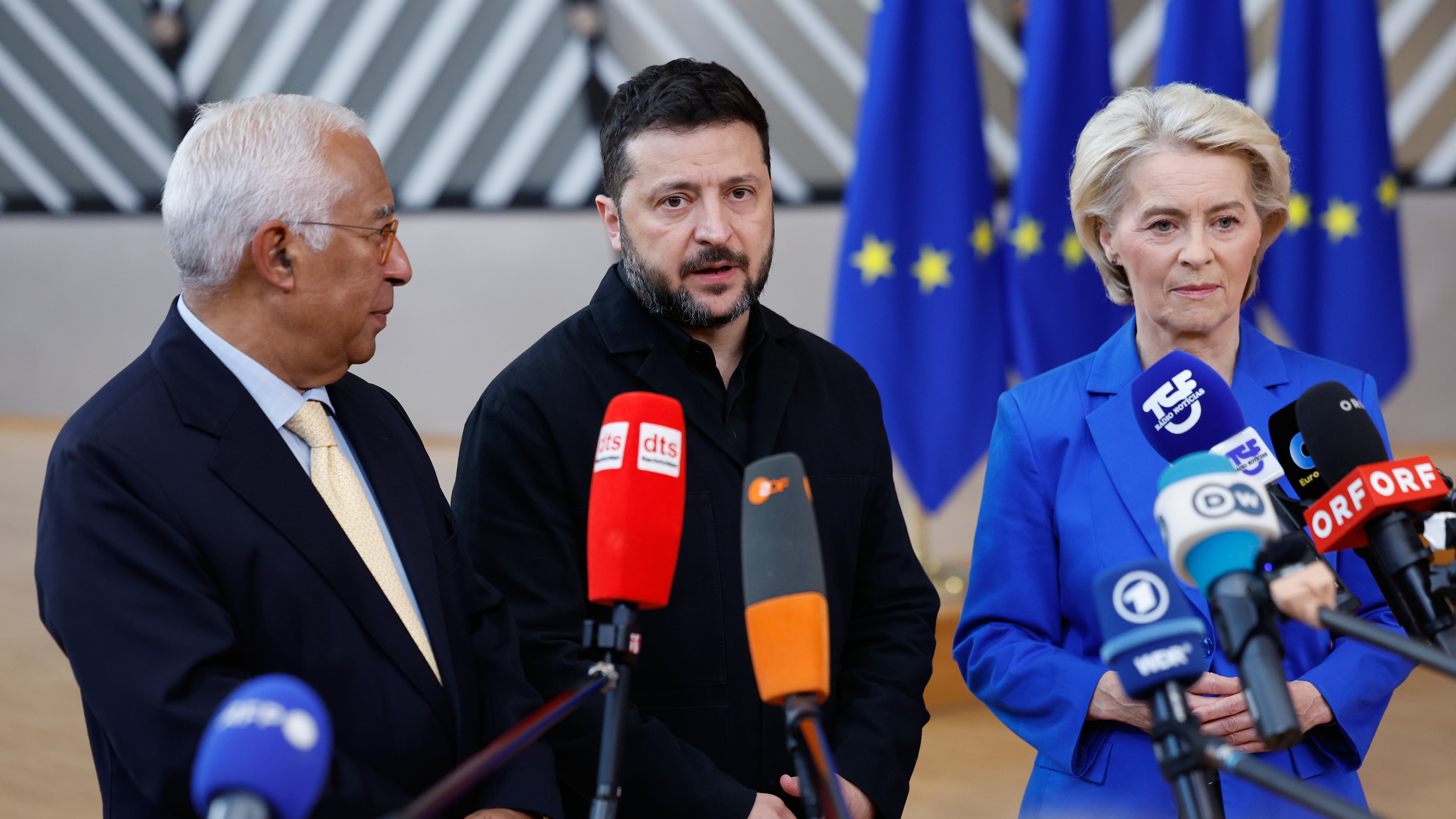
WHY is Micheál Martin so keen to go to war?
The Taoiseach’s enthusiasm for Irish military action was evidenced in the Dáil this week, when his government passed the first stage of a bill to allow Ireland to go to war without United Nations approval.
If the bill becomes law, the Irish government can send its troops overseas when and where it wants. Martin’s policy switch is seen by many as a step towards ending Irish military neutrality.
All the opposition parties, including Sinn Féin, argued forcibly against the bill, but it was Independent Ireland TD Michael Fitzmaurice who asked the question which most others avoided.
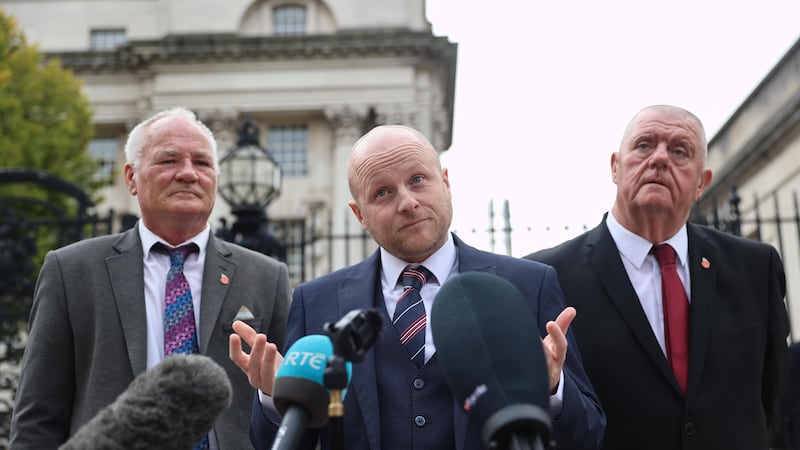
He wondered why the policy was being changed. He asked: “Who’s calling the shots?”
The answer lies in Brussels. The European Union (EU), which Ireland joined in 1973, no longer exists. Back then it was an economic agreement based on peaceful co-operation between states.
Today it is becoming a military superpower. This year it will spend £382 billion on military equipment and systems – an increase of 75% since 2021.
In her state of the union speech last month, EU Commission President Ursula von der Leyen announced proposals for a “European Security Council”, which will include non-EU members Canada and Ukraine.
She also announced an “Emergency Security Protocol” and an initiative to develop air and missile defence systems.
The Financial Times wrote that she sounded more like a chief of the defence staff than president of the EU Commission.
And guess who sits at the top of the EU right now? That’s right – good old Ireland, currently occupying the EU Presidency role and always ready to fight someone else’s war.
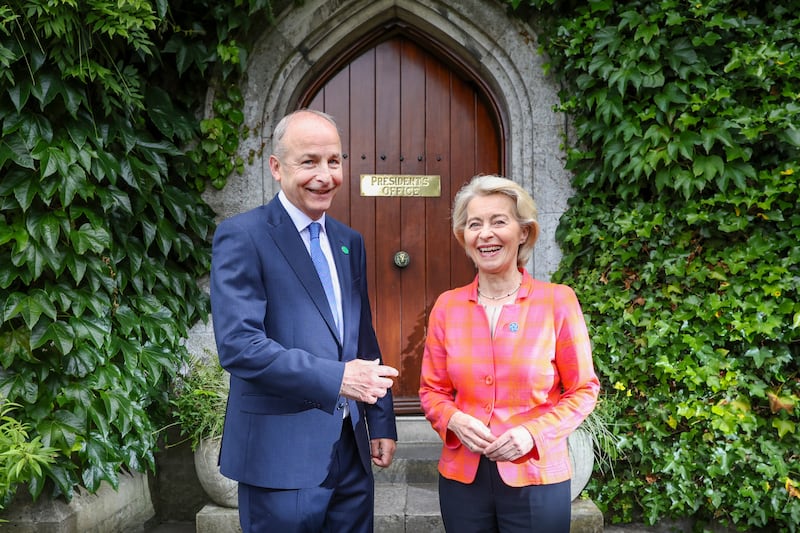
So Micheál Martin is drafting the EU budget for 2028 to 2034. Among his proposals in the light of increased military spending are a 3% cut to agriculture and a 17% reduction in the EU’s foreign aid programme.
The chairman of the EU Military Committee is General Seán Clancy, former Chief of Staff of the Irish Defence Forces.
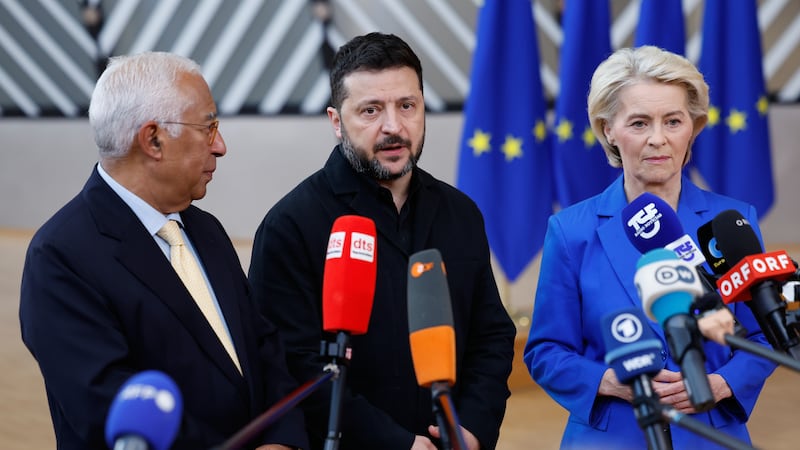
When Ireland assumed the EU presidency in Dublin in July, President Zelenskyy of Ukraine spoke at the opening ceremony. Ukraine is not an EU member.
The BBC reports that “corruption continues to be a significant problem” in Ukraine and that “nationwide protests broke out” last year when Zelenskyy tried to curb the independence of two anti-corruption bodies.
Ukraine’s level of corruption is a major factor in preventing it from joining the EU, but the EU is changing its core purpose to fight for it. Is it for this that Irish people should die?
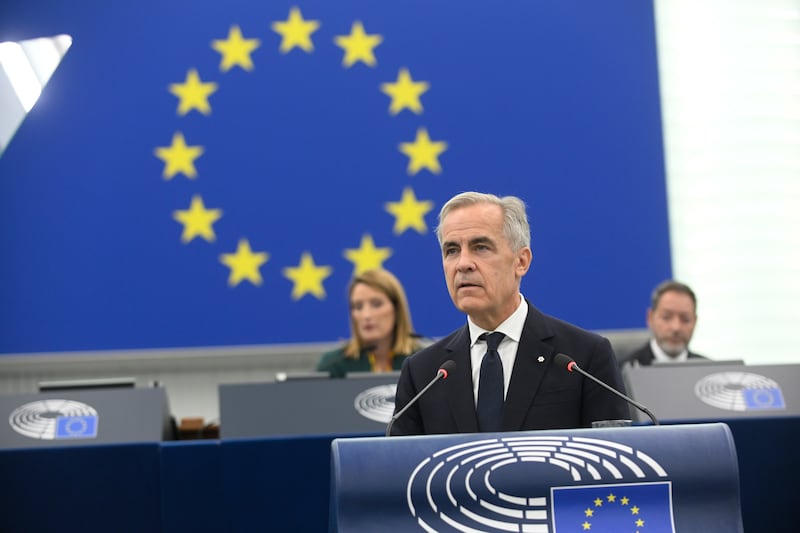
Canadian Prime Minister Mark Carney was guest of honour at von der Leyen’s state of the union address. Canada is not a member of the EU, but it is a major supplier of arms, minerals and energy. In America’s absence, this is the new NATO in the making.
Adopting this new military culture requires the EU to change how it operates. It is planning to increase its membership by up to half a dozen new states.
Oddly, the vote to admit them will be taken after they have joined, on the basis that “earlier integration would open opportunities for union business”, according to von der Leyen.
She is also aiming to abolish the present system of requiring the support of each country for commission decisions to be passed. It would be replaced by a majority vote, which could leave Ireland with no effective voice.
In economic terms Ireland will also suffer in the new EU, which is investing heavily in manufacturing military equipment. Ireland does not have an arms industry.
As the EU builds its economic base around war, Ireland’s reliance on US companies will leave it as an outlier from the rest of Europe.
Following the global economic crash in 2008, the EU opted for austerity, which is why there is rioting in France, Spain and Italy and the German economy is collapsing.
The EU is an economic mess, but just as World War II rescued the US economy from recession, Europe is intent on war as the road to economic salvation.
John Redmond urged Irish men to fight for Britain in 1914. Today the Dublin government is laying the legislative basis for Irish soldiers to fight for the EU.
A majority of Irish people support military neutrality, but an even bigger majority supports EU membership, apparently unaware that the organisation is not what it was.
No Irish political party appears willing to tell them that, which is why Micheál Martin can lead Ireland to fight for an EU which no longer exists.
If you have an opinion on the issues raised in this article and would like to submit a Letter to the Editor to be considered for publication, please click here.
Letters to the Editor are invited on any subject. They should be authenticated with a full name, address and a daytime telephone number. Pen names are not allowed.