
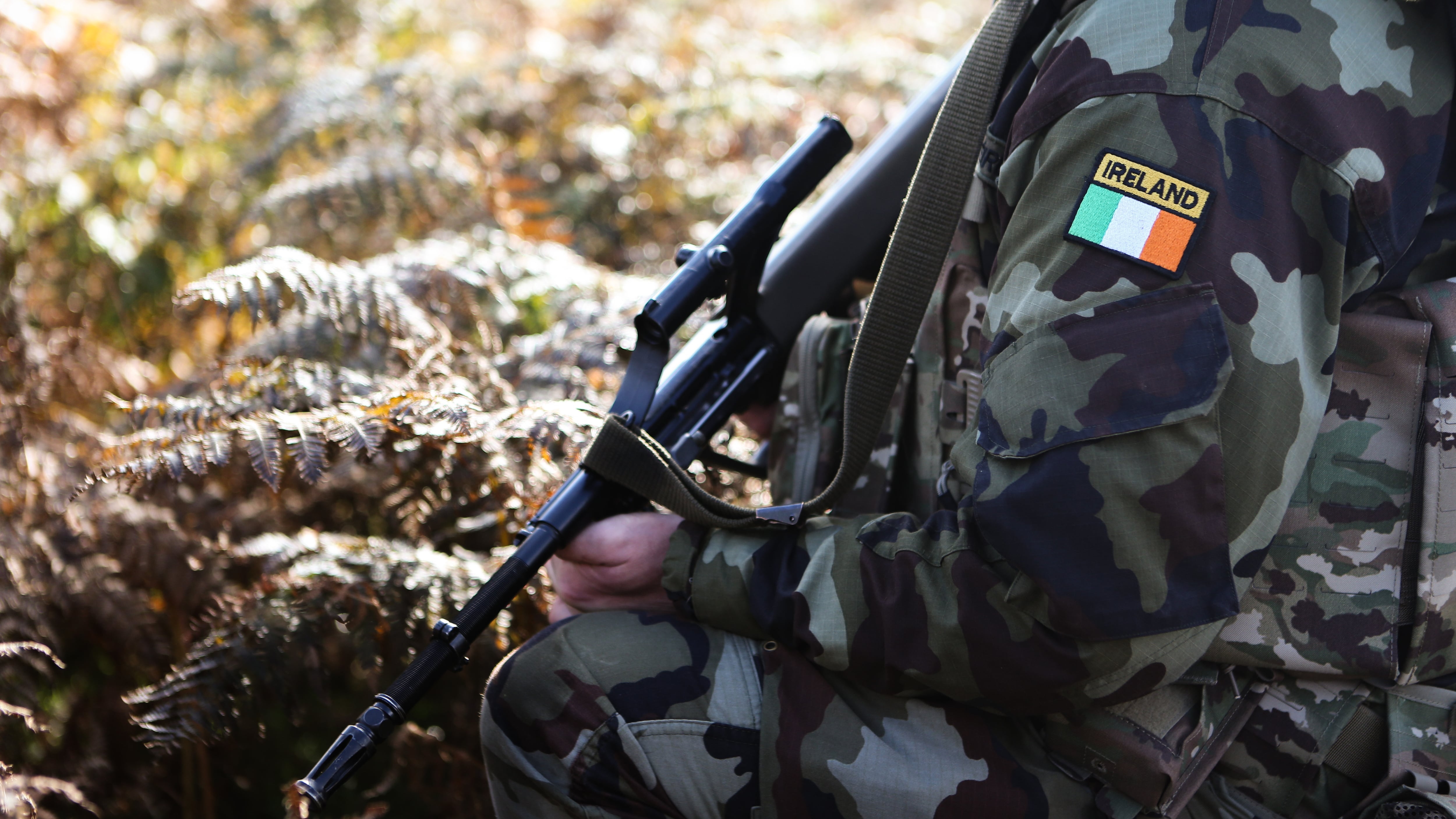
THERE’S been a row simmering all year in the south about the triple lock.
No, nothing to do with pensions. In the south the triple lock means – depending which side you’re on – a guarantee of neutrality, or a block on Ireland’s participation in peace-keeping, or, as others would put it, preventing “military adventurism”.
To remind you, the triple lock means that Ireland can’t deploy more than 12, yes 12, troops abroad unless approved by a government decision, a vote in the Dáil and – this is the current point of contention – a vote of the UN Security Council.
Micheál Martin and Fine Gael have been manoeuvring for a couple of years to ditch the UN provision and that’s now the government’s position.
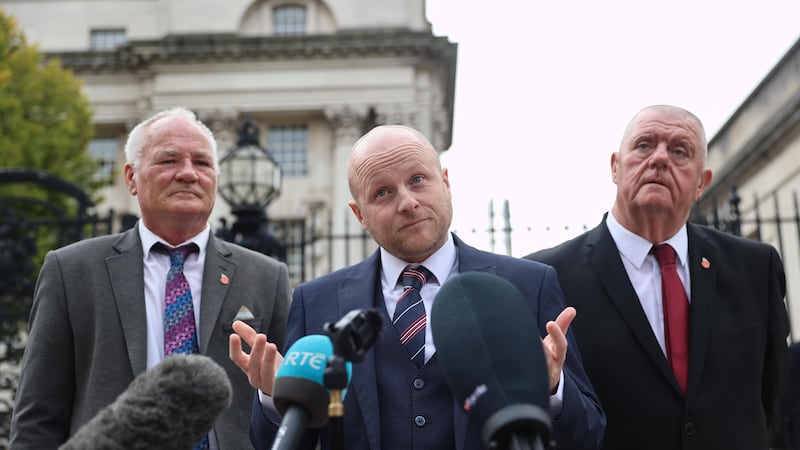
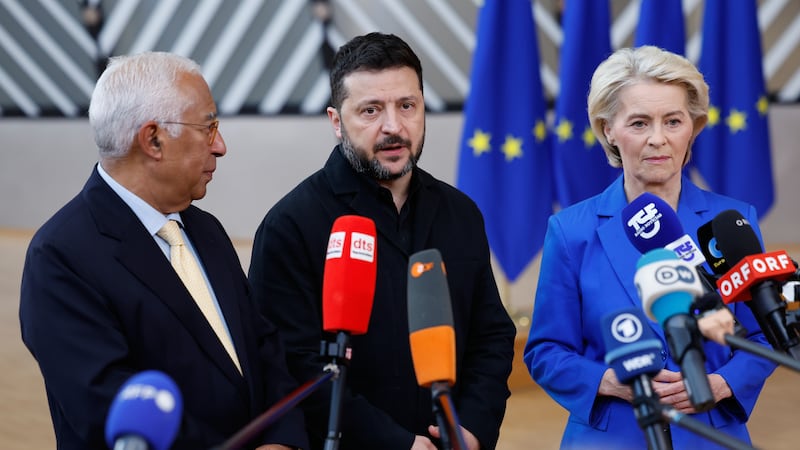
They argue that the Security Council is dysfunctional, with two or three of the five permanent members likely to veto any peace-keeping proposal for different reasons.
For example, the Irish peace-keeping mission in the Lebanon, UNIFIL, runs out at the end of the year after over 40 years. Its mandate won’t be renewed.
The government presented its bill to remove the UN requirement on Wednesday evening amid furious opposition which actually began on Tuesday, with opposition TDs holding up posters saying “Save Neutrality” and demanding more time to debate the legislation.
All the opposition parties oppose the bill: Sinn Féin, Social Democrats, Labour, Aontú and Independent Ireland.
There is also disquiet in Fianna Fáil led by long-standing TD and former minister Wille O’Dea, who presented a letter signed by 20 colleagues questioning the basis of the bill.
O’Dea and the others are putting down a marker because Martin’s move is unpopular in the country and wily O’Dea wants to be on the right side of public opinion, as expressed repeatedly in polls. O’Dea and another Fianna Fáil TD abstained on Wednesday.
Tuesday and Wednesday saw fierce exchanges in the Dáil, particularly between the Taoiseach and Mary Lou McDonald and other Sinn Féin TDs.
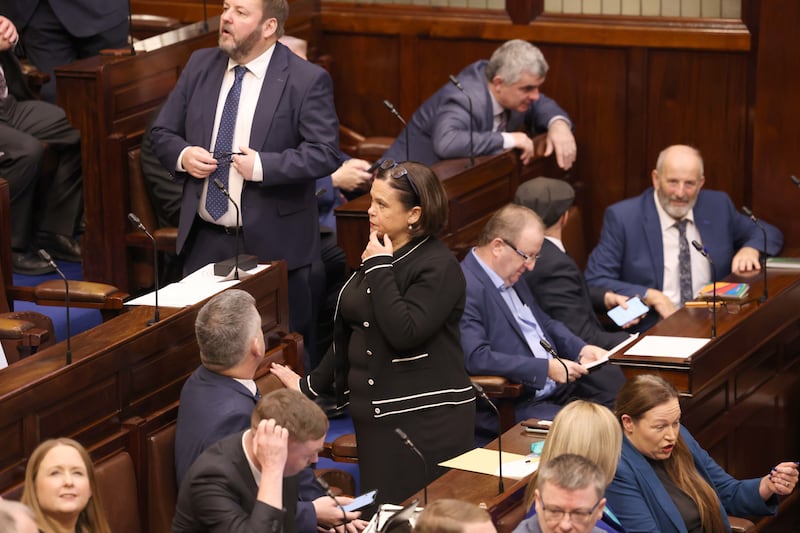
McDonald accused Martin of wanting to become involved in “military entanglement” – code for involvement in EU alliances and joint operations. Some Fine Gael TDs want to join NATO.
Martin ridiculously accused Sinn Féin of supporting the Nazis and “colluding with the Hitler regime”, even though he has spent years hotly denying there’s any continuity between modern Sinn Féin and the pre-war party.
He said Sinn Féin “couldn’t give a continental about Irish neutrality for many many decades”. High-level relevant argument indeed, eh?
What Martin and government ministers like Helen McEntee never managed to explain satisfactorily is why they are so keen to send Irish troops abroad and under what auspices.
If the UN isn’t able any longer to assemble a peace-keeping force, who is? The EU? Who would give the authority?
The opposition parties repeatedly reminded the government that there had to be two referendums before the 2001 Nice Treaty was ratified, the second to amend Bunreacht na hÉireann to allow Ireland to opt out of participation in common defence.
They also reminded Martin that he had once believed that “the triple lock is at the core of our neutrality” and said so. No longer.
The bill now goes to its committee stage where more acrimonious argument will certainly ensue, but in all likelihood it will pass before Christmas, despite efforts to persuade the President to refer it to the Supreme Court to test its constitutionality.
Next year we’ll see who’s right about the government’s motives for forcing it through.
Is it simply to avoid accusations by other EU states of free-loading on European security?
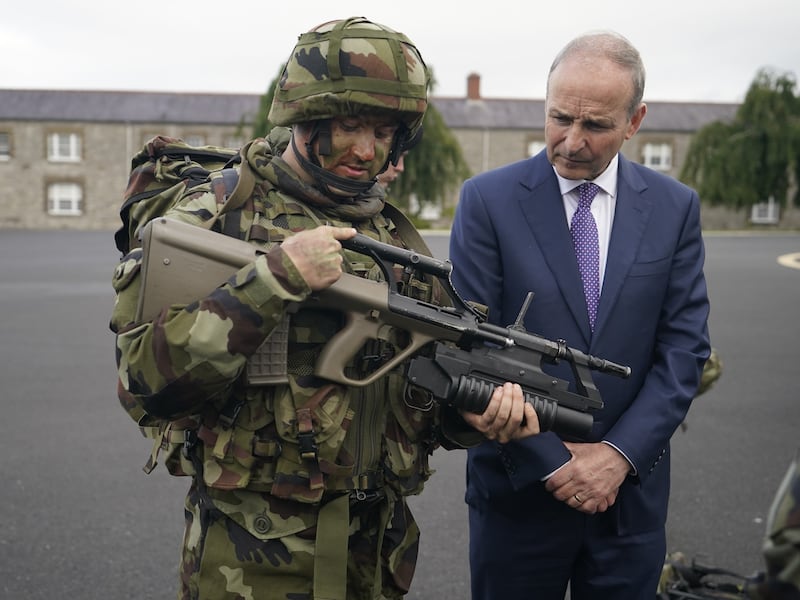
Is it to be seen as a way of circumventing the twenty-sixth amendment to Bunreacht na hÉireann for no good reason to engage in joint EU operations?
What role can Ireland play? The facts are these.
The Irish army is miniscule, 7,500, its ‘navy’ microscopic at 800, the air force a particle at 690.
Military equipment is wholly deficient to the extent that Ireland couldn’t contribute meaningfully to European defence.
It would need years and billions of euro to build up manpower and materiel to a level comparable to medium-size EU states.
The question remains why? No one is going to invade Ireland (Actually no one is going to invade Britain either, despite tiresome warmongering language from England’s military establishment).
Who or what is all the new equipment Fine Gaelers like Simon Harris is keen to buy designed to deal with?
The axiom is that generals always prepare to fight the last war. Much of the materiel the Irish government has ordered from France, like 400 armoured vehicles and long range Caesar howitzers, will already be obsolete when delivered in 2030, as drone warfare in Ukraine has proved.
So, is the whole rancorous divisive debate on the triple lock just an unnecessary performative exercise to please Brussels?
If you have an opinion on the issues raised in this article and would like to submit a Letter to the Editor to be considered for publication, please click here.
Letters to the Editor are invited on any subject. They should be authenticated with a full name, address and a daytime telephone number. Pen names are not allowed.