Inside a federal court room in the United States’ second city, Chicago, the Irish machine that dominated its politics for much of the last 150 years could fairly and officially be declared buried.
Michael Madigan, a most deeply skilled operator and the longest serving political leader in US history, was sentenced last week to more than seven years in prison on corruption charges.
The 83-year-old Madigan, for a near unbroken 40 years the speaker of Illinois House of Representatives, will follow close political ally and once the most powerful man on Chicago City Council, Ed Burke, into a federal penitentiary. The 81-year-old is serving a two-year sentence for bribery and extortion.
These two men, who dominated both Chicago and Illinois politics for decades right up until the last few years, are the last of a line of leaders stretching back to when the Irish first started working politics in the latter part of the 19th century, hugely successfully.


It is a sleazy end to a storied history that began out of necessity for an often-despised immigrant population, was pockmarked by corruption and racism but also by generosity for others, drive and vision, all making the city it is today.

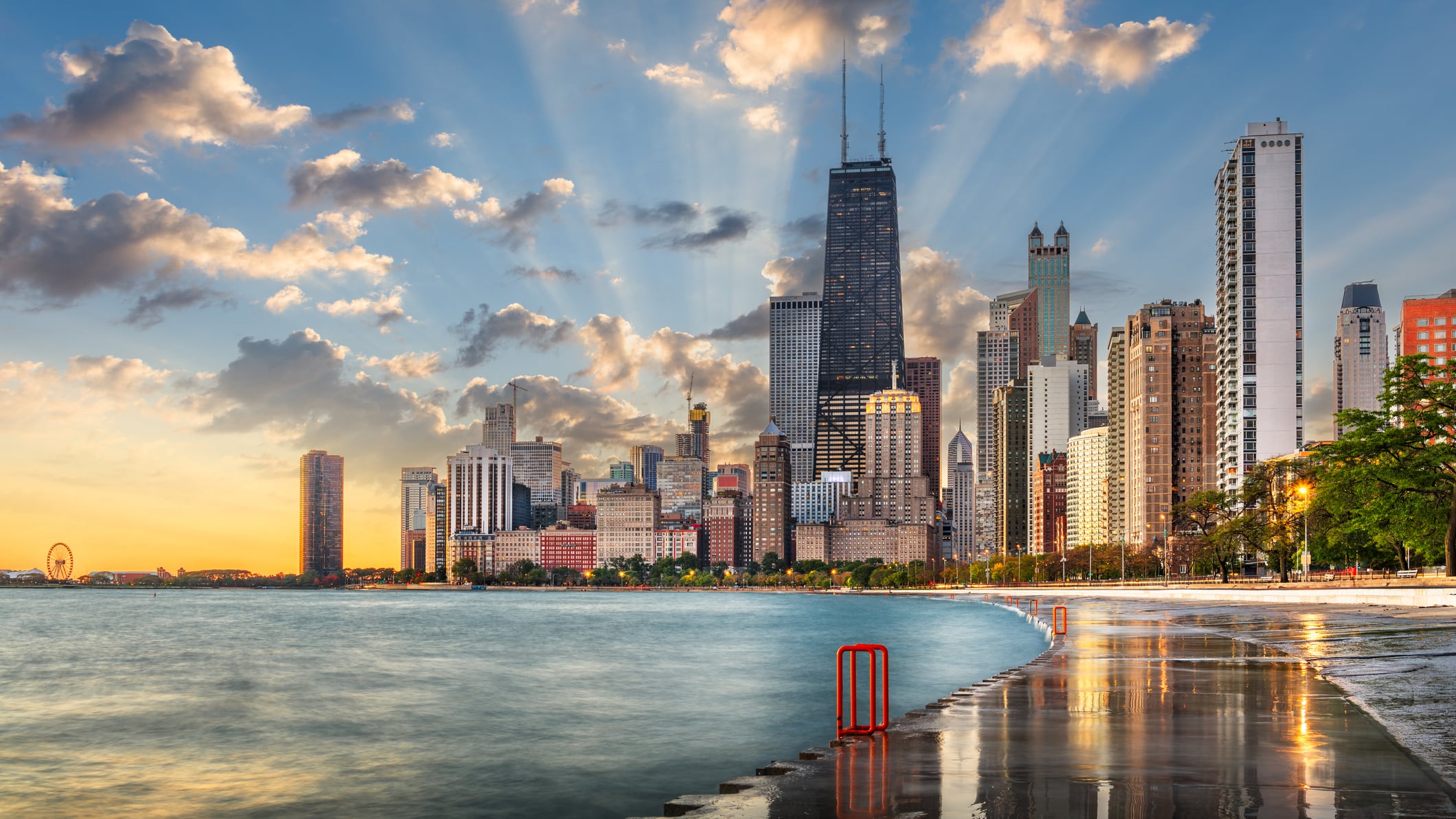
Modern architectural marvels stand over a diverse, sprawling metropolis packed full of hard working people, stretching for miles into the mid-west flatlands and over Lake Michigan and a shoreline far sighted city fathers ruled more than 100 years ago should be for ever open to the public.

It is today also deeply segregated with eye-watering income and health inequalities, a more than 15-year gap in life expectancy between people living in the monied mansions and apartments just back from that shoreline and neighbourhoods no more than two miles away.
Arguably, the Irish domination of Chicago politics began with a man with the moniker ‘Honest’, and it was not sarcastic.
Cavan man John Comiskey, who emigrated in his early 20s during the Great Hunger, was a former tax man and avowed reformer repeatedly elected to the council from the late 1850s out of the near southside of the city, an area the Irish rapidly turned into a strong hold. His son went on to found the Chicago White Sox baseball club.

Many came from Mayo and surrounding counties and worked the dirty and dangerous jobs in the vast meat slaughterhouses, the famous stock yards that connected the livestock producing plains of the west to the east.
While large numbers toiled, the Irish had some major advantages as they constructed political power; most spoke English, many were educated and savvy political refugees and they formed strong clubs.
In these years, Civil War veteran, Irish nationalist and journalist, John Finerty, from Galway, was elected to the US House of Representatives as an Independent Democrat and then was the long time president of the United Irish Societies of Chicago.

Irish politicians drew votes not only from among its own but also other larger ethnic groups, particularly the Polish, similarly looked down upon by the traditional Chicago establishment, largely Republican and Protestant. The Chicago Tribune was particularly vitriolic. But the Irish knew how to look after people.
Then in 1893, John Hopkins became the first of nine ‘Irish’ mayors, the first Catholic, a youngish man elected with the backing of, among others, one Roger Sullivan, the son of Irish immigrants and with particular abilities to influence thinking in cigar smoke-filled back rooms.
But votes needed to be delivered and money made, and much of that came from the streets.
John ‘Bathhouse’ Coughlin and Michael ‘Hinky Dink’ Kenna ran the First Ward for decades, winning election after election between them from the early 1890s until they were both dead, the latter passing away in the 1940s.

It was close to the centre of the rapidly growing and prospering city centre, and that’s where the money was, from high finance to street prostitutes.
“Coughlin represented the world’s richest ward with a constituency of some of the city’s leaders in finance, industry, the arts and sciences, as well as the scarlet sisterhood,” wrote journalist James Doherty when looking back in the early 1950s.

Doherty added: “Coughlin was considered a good family man, personally virtuous. Yet he was the companion and protector of prostitutes, pimps, barrel house bums, and saloonkeepers.” He was elected 20 times from 1892 till his death in 1938.
Mayor Richard J. Daley was a son of Bridgeport, the centre, or epicentre, of the south side Irish and where his two immediate predecessors, Edward Kelly and Martin Kennelly, also hailed from.
Daley ran the city for more than two decades until his death in 1976, his tenure marked by large scale infrastructure projects, many controversial, his delivery of votes for John F. Kennedy and the explosive 1968 Democratic Party convention.
In the years after, the city elected its first female and first black mayors, but then son, also Richard, took over in 1989 and was the boss for the next 22 years.

Daley junior worked closely with Madigan and Burke, all of them carving out political careers from the 1970s. Their relationships were often fogged by wariness, by many accounts.
In the end, the last two giants of the Irish machine are convicted criminals.
But what poet Carl Sandburg called the city of the big shoulders and its people will survive and hopefully thrive, with way more than a sliver of the Irish in them.