The Executive parties are currently engaged in negotiations with the UK Government for more funding for Northern Ireland, with the shared objective of enabling agreement on a budget.
These discussions, by their nature, are largely focused on the quantum of funding available.
However, perhaps what is equally important is the need to fundamentally reconsider how we spend this public money.
Departmental budgets are set, year-in year-out, mainly on the basis of what has been allocated previously, with an incremental annual change.


The underlying basis of such budgetary allocations is that we, in the main, continue to fund what we have always funded. Budgets are backward looking in this sense.

This takes no account of the emerging risks or policy challenges that lie ahead.
Even more crucially, the current budgetary processes do not reflect the fact that not all resource expenditure is equal – some funding merely keeps the lights on, while other spending represents investment.
This occurred to me during previous internal Executive budgetary negotiations, when individual departments would make the case regarding their inescapable spending pressures, yet there was no mechanism or framework by which to rank the relative significance of these competing pressures.
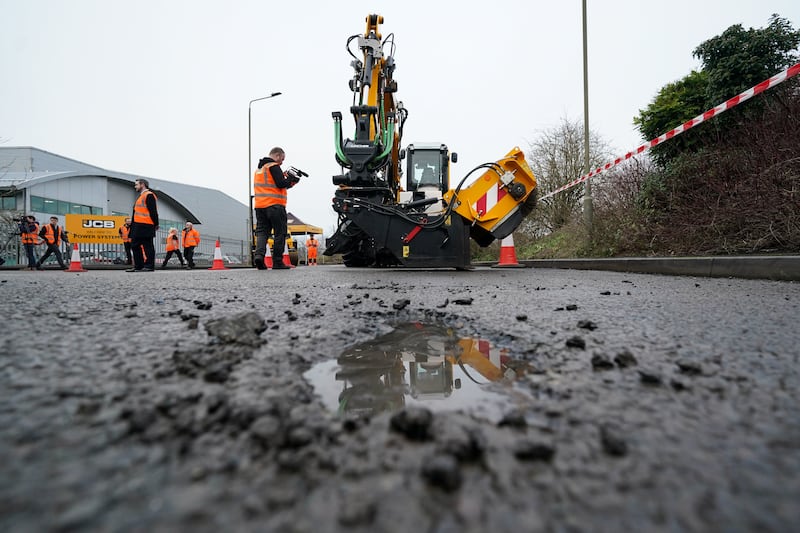
Allocating public funding to fixing potholes, for example – whilst obviously important on some level – is not akin to spending on safeguarding Northern Ireland’s drinking water by protecting Lough Neagh.
- Dublin and Edinburgh set example for Stormont with energy supports - The Irish News viewOpens in new window
- Home heating oil payments - Stormont facing ‘bureaucratic quagmire’ to pass on £17mOpens in new window
- We should reflect on the reality of UK public financesOpens in new window
- Why ‘Manchesterism’ could be so significant for Northern IrelandOpens in new window
The former has limited wider significance, whereas the socio-economic implications of the latter are enormous, and yet they are bid for and funded via the same resource funding pot.
The current system is stacked against the sufficient allocation of public funding in areas of investment and/or mitigation of emerging and future orientated risks, whether that be an aging population, climate change or threats to energy sustainability.
The nature and duration of political mandates is such that it is politically preferable to respond to the short-term pressures and sustain the status quo.
This makes meaningful public transformation acutely problematic – we are seeing this on a regular basis across Northern Ireland in a range of policy areas. When spending on future outcomes crowds out spending on current pressures, the latter will always win.
There is a cost associated with this financial short-termism. Failure to invest in prevention, energy and infrastructure resilience or emerging skills needs does not eliminate these costs, it merely transfers them into the future and often at considerably greater expense.
As we approach a new electoral mandate, there is an opportunity to rethink this process.
Perhaps we should consider how we might develop a strategic spending model, one in which policy priorities are ranked and weighted on the basis of regional significance – whether social, environmental or economic.
In France, for example, the Government evaluates and ranks its national budget using a specialised green budget (Vert) report annexed to its finance bill, rating state expenditure and tax policies on their environmental impact.
- Economic consequences of the Middle East conflict - and why Northern Ireland might present as a particular propositionOpens in new window
- Constructing a four-pillared framework for economic transformation in Northern IrelandOpens in new window
- Middle East Crisis: Government should target financial support rather than apply blanket reductions to fuel duty, to avoid unintentional impactsOpens in new window
- Unlocking Northern Ireland’s potential - a proposed framework for economic transformationOpens in new window
Such an approach could be broadened locally to consider the social, economic and environmental impact of local expenditure plans.
If departmental funding bids were weighted in terms of these wider impacts, this would drive a much more insightful, intentional and sustainable approach to public spending in Northern Ireland.
We might also consider reviewing what are deemed to be statutory obligations within departments and, as such, which spending pressures are truly inescapable in light of current and emerging policy issues.
A strategic spending model could enable structural embedding and incentivisation of spending in areas of prevention and early intervention, providing the financial mechanism to drive change for this region.
It could also form a critical component of a stronger future foresight process that considers, and addresses, the implications of changing demographics and evolving risks.
This could be underpinned by an outcomes-based Programme for Government, supplemented by a Coalition Agreement for the new Executive.
Reorientating expenditure in a manner that prioritises and safeguards future social economic and environmental outcomes would deliver an improved outlook for NI, including in relation to public finances.

It is, ultimately, financial fire power that enables decisions, so perhaps we need to consider how we reorientate the budget process to drive the critical regional outcomes that we wish to see.
- Jodie Carson is a professor of strategic policy in practice at Ulster University