When we think about surgery, we often picture hospital beds, surgeons in scrubs and the anxiety of recovery. But what if the most important part of surgery happens before you ever enter the theatre?

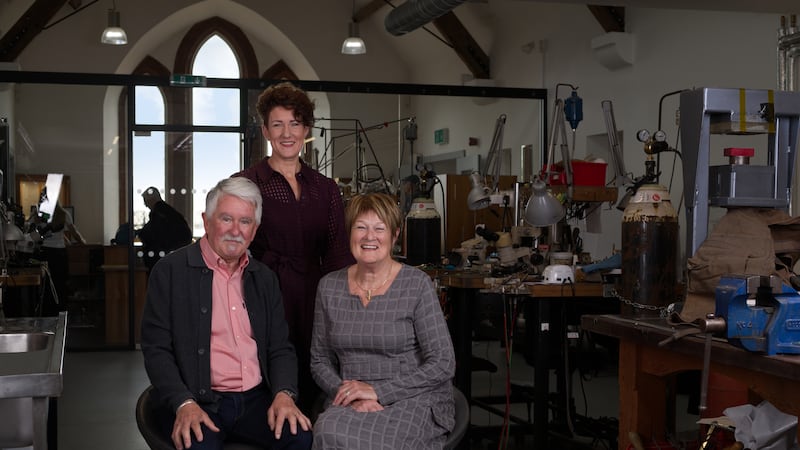
Dr Chris Hoo and Dr Ciara McGoldrick are consultant oncoplastic surgeons at the City Hospital in the Belfast Health and Social Care Trust, who also run a thriving private practice together.
As advocates of strength training ourselves, my colleague Conor Johnson and I were delighted to sit down with them recently to learn more about the impact of strength training on the outcomes and recovery of their patients.
What surgeons see – beyond BMI
BMI (body mass index), calculated from height and weight, gives a basic idea of whether someone is underweight, healthy, overweight, or obese.


Traditionally, BMI has been used to stratify the risk of patients for surgery, with the NHS stipulating for many operations that are elective in nature a BMI cut-off.
However, medical and fitness professionals now recognise body composition as a far more accurate and personalised measure of physical health and fitness.
- Why strength training is essential for healthy ageing: How lifting can boost mobility, independence and longevityOpens in new window
- ‘The gym is a place for improvement in the same way a library is a place where you study’ – Hench’s Rory GirvanOpens in new window
- Beyond the miles: The science of carbs, creatine and brain fuelOpens in new window
Some preliminary studies have shown that BMI alone doesn’t give the whole picture. Someone with only a slightly above normal BMI can have a combination of low muscle mass with elevated fat mass - a condition coined sarcopenic obesity.
Lancet Oncology published a major paper in 2024 showing that this combination of low muscle and higher fat correlated with poorer outcomes in patients with cancer.
We learned that two patients in the same age range, gender and BMI, can have very different outcomes depending on their body composition. The patient with a more favourable ratio of muscle to fat would leave hospital sooner, with fewer complications and a faster return to a better quality of life.
Chris, Ciara and their team use CT scans of the abdomen and pelvis to plan complex breast reconstruction. Body composition can also be assessed using CT scans of the gluteal and abdominal areas to measure the proportion of fat, muscle, bone, and water making up a person’s body—something influenced significantly by lifestyle choices, beyond just age and genetics.
This allows them to stratify the risk and potentially advise patients to postpone their surgery to focus on building their muscle mass if their cancer diagnosis allows this.
Doing nothing is riskier than exercising
Our activity levels, combined with diet, directly affect body composition, which surgeons consider when determining the risks and benefits of surgery.
In practical terms, staying active before and after surgery is proven to result in fewer complications - comparable in magnitude of impact to giving up smoking, meaning:
• Shorter hospital stays
• Faster recovery times
• Enhanced quality of life
• Improved overall health outcomes
The key to achieving these benefits is close collaboration between patients and their surgeon.
Being fitter and stronger clearly isn’t just about looking good; it’s fundamentally about optimising your quality of life, health and longevity - helping maintain a sense of independence and your joie de vivre
Busting the myths
A challenge for surgeons is the many myths and misconceptions concerning fitness that prevent patients from being prepared as well as possible for surgery:
Myth: Resting entirely before and after surgery is best
Truth: Appropriate physical activity and strength training can significantly reduce risks and improve recovery.
Myth: Training is risky after surgery
Truth: Exercise and strength training tailored to your needs is safe and highly beneficial, with week-by-week guidance on safe movement and recovery.
Myth: Fitness level has little effect on surgical outcomes
Truth: Fitness directly influences how well you recover and significantly reduces surgical risks.
Myth: Strength training is primarily for younger or already healthy individuals
Truth: Strength training is most beneficial to those who are inactive as they have the highest ability to adapt at any age - these are also known as beginner gains.
Myth: Resistance training won’t improve fitness
Truth: When strength training vigorously, you’ll inadvertently be getting fitter as well as stronger whilst improving your body composition.

Strength as medicine – the evidence
Maintaining muscle and strength isn’t just about how you look or what you can lift; muscle should be viewed as a savings account, something you can draw upon when needed.
Even a simple grip strength test can be used to assess overall health and even has the potential to predict longevity.
A growing body of research supports progressive exercise, including strength training, as essential pre- and post-surgical medicine:
• Patients who are fitter and stronger experience fewer complications post-surgery
• Being active before surgery shortens hospital stays and accelerates recovery
• Increased muscle mass strengthens immune response, reducing infection risks
The sobering truth is that after about the age of 30, muscle mass begins a gradual decline, accelerating in our 60s and 70s.
Even short periods of inactivity - due to illness, for example - can cause muscle and strength loss equivalent to years of natural ageing.

Prehabilitation: From waiting list to preparation list
Some cancer patients have four-to-six weeks between diagnosis and surgery, ideally, although regrettably sometimes this is longer; however, any increase in exercise, even for a matter of weeks, is beneficial.
If you’re currently inactive, even a small start can make a big difference - just three weeks of brisk walking or cycling can raise your aerobic fitness by 10%.
If you’re already training, you’re encouraged to do more as over the same period, muscle strength can increase by over 20% with simple resistance training.
Whether you have four weeks or four months, every rep, step or pedal will serve as part of a prehabilitation programme, which can reduce complications and shorten your hospital stay.

What you need to know
• Fitness and muscle mass are as powerful as quitting smoking for reducing surgical risk
• A proactive “pre-hab” programme can halve the chance of serious complications
• Even modest, regular aerobic fitness and strength work can make a difference, particularly for people who don’t exercise
Developing an Anchor Habit
Sometimes, patients are guided away from surgery to make changes in their lives that will help drive better outcomes.
Conor and I learned of one such patient who needed to bring their BMI to a safer range before getting the green light.

After six months, they hit these goals but decided to keep on going; 12 months later and they were fitter and healthier than ever, having built an anchor habit - a core behaviour that supports other healthy routines - of training that would stand them in good stead for surgery, then recovery, and long into the future.
Being fitter and stronger clearly isn’t just about looking good; it’s fundamentally about optimising your quality of life, health and longevity - helping maintain a sense of independence and your joie de vivre.
By progressively embracing training, you’ll begin to form an anchor habit that will add life to your years and years to your life - even tipping the scales in your favour should you ever need the expert help of Chris, Ciara, or surgeons like them.