Christmas is still the season of goodwill, with many charitable organisations in Northern Ireland receiving more private donations during December than at any other time of the year.
These small acts of personal philanthropy will make all the difference to local charities and the people they help. Some of these charities are familiar names that have been operating for decades. Others are relatively new and less well-known. But one, the Belfast Charitable Society, has been helping the poor and socially disadvantaged of the city for more than 270 years.
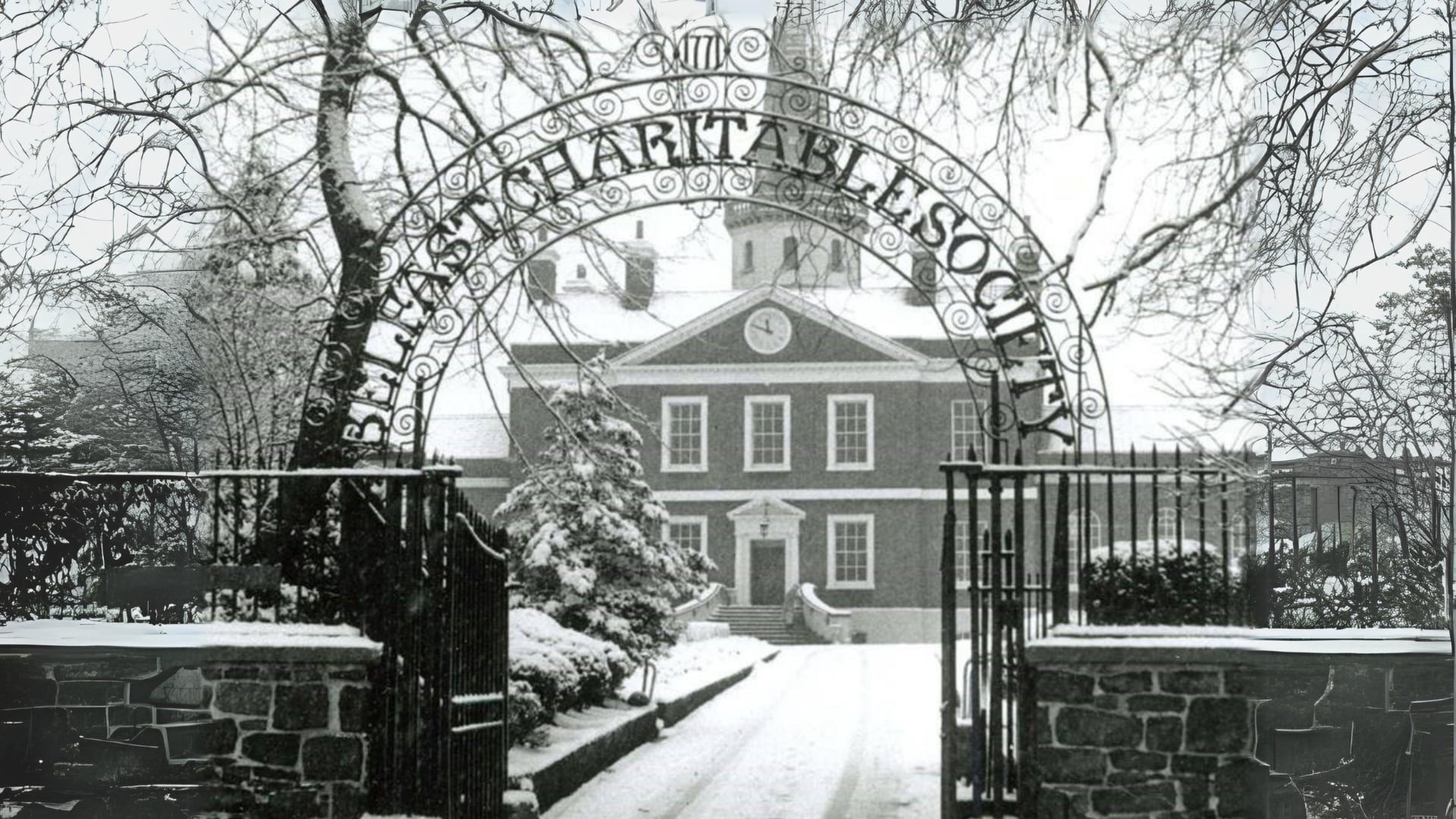
On Christmas Eve 1774, the Belfast Charitable Society opened the doors of the Belfast Poor House and Infirmary, in what is now called Clifton House, a large, majestic building on North Queen Street.
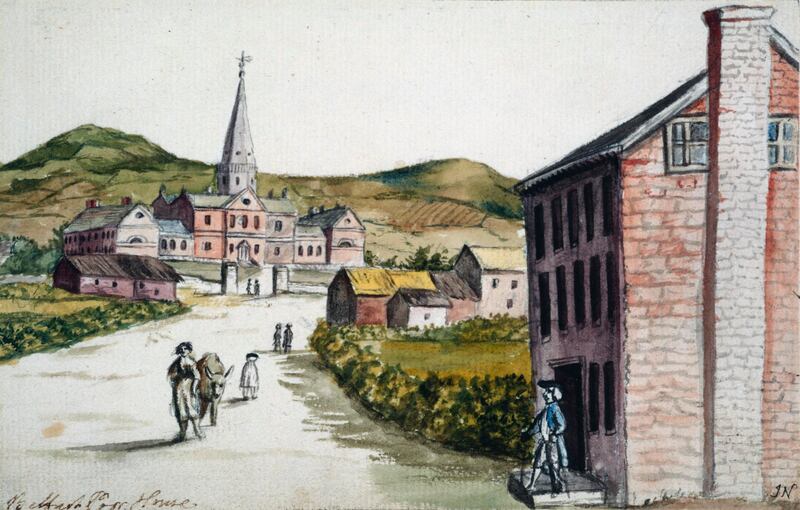
The Poor House provided accommodation for 36 adult men and women, and 24 beds were positioned in the infirmary. The house was stocked with supplies of potatoes, oats, and other essential provisions, staff were appointed, and volunteers lined up. Belfast had never seen anything like it.
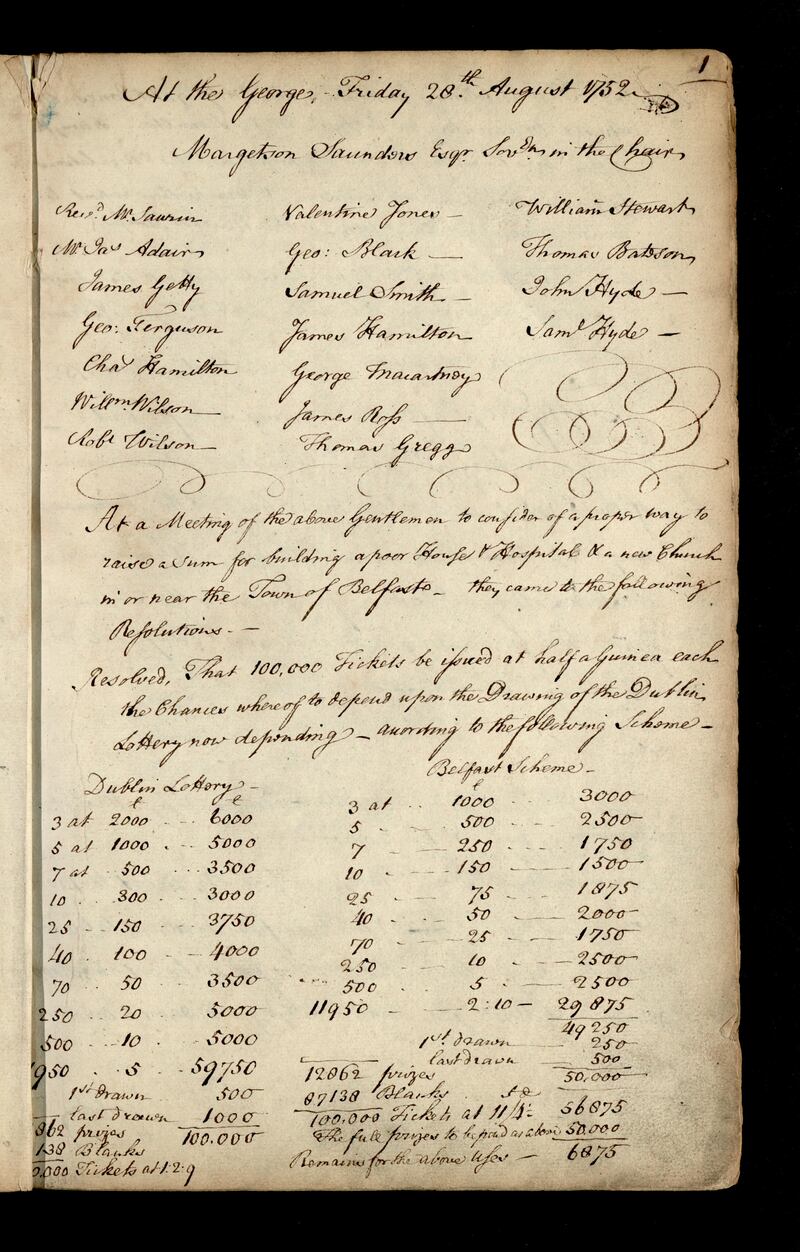
Six months previously, on June 1, 1774, Belfast Charitable Society had been incorporated into law by an act of the old Irish Parliament. But the Society’s story began 22 years before that, on a summer evening in August 1752, when a group of 19 merchants, burgesses (or councillors as they would now be called) philanthropists, and social activists, met at the George Inn on North Street, to discuss the rising rates of poverty in the rapidly expanding borough of Belfast.
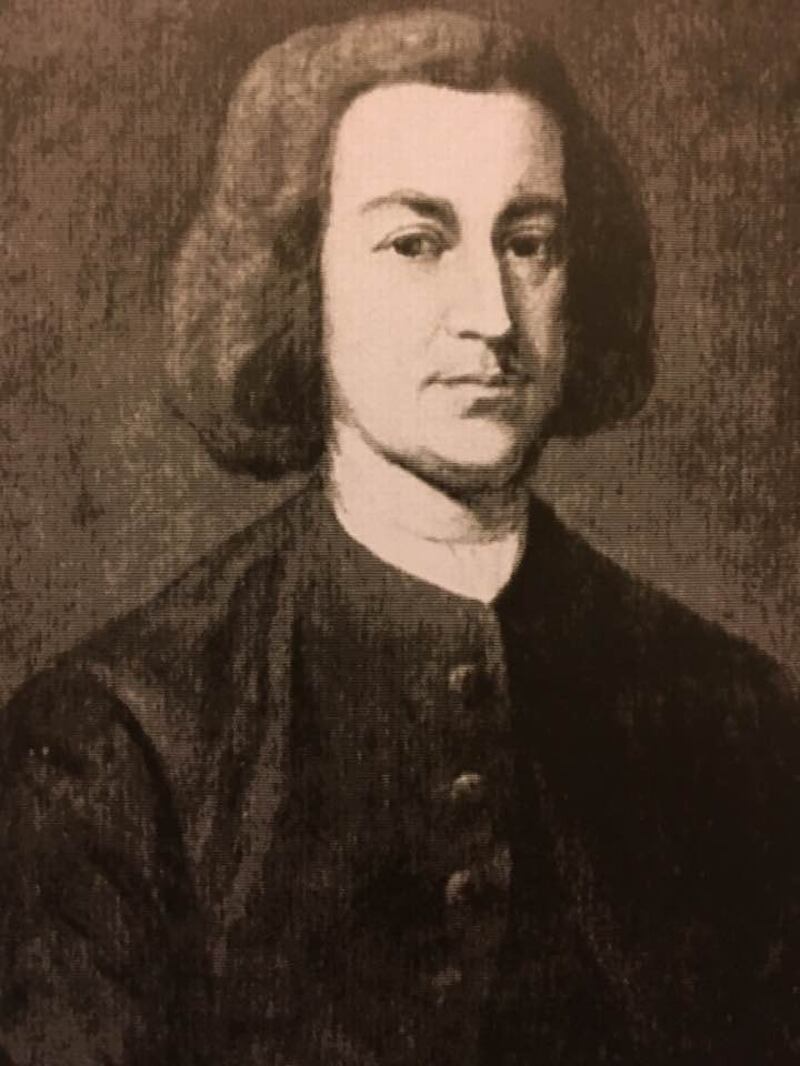
These founding fathers, as they became known by the Society, included a number of influential and charismatic characters, such as Valentine Jones, a wine merchant who was one of the wealthiest men in Belfast at that time, and a leading figure in the Belfast Volunteers, and James Hamilton, another wine merchant, who would be appointed as an ‘overseer of the poor’ in 1757 and go on to serve two terms as Sovereign of Belfast (a title that would eventually become Lord Mayor).
Belfast was changing. In the first half of the 18th century, its population had more than tripled, rising from around 2,500 in 1700, to over 8,000 in 1757. This increase was due to both the development of the port and the rapidly expanding cotton trade.
People were migrating to the town from all over Ireland in the hope of finding work, which many did, but inevitably some did not. And as the population expanded, so too did the number of destitute and sick people with no means of survival other than begging and living on the streets.
Charitable giving was not entirely unknown at the time. Donations and bequests were mostly made through private trusts or via the church, but the concept of structured charity was only just beginning to evolve. That night, in the George Inn, those 19 men decreed that something must be done to address the wave of poverty in Belfast, and decided the best way forward was to build a poorhouse and infirmary.
They had a piece of land in mind to the north-west of the town that was owned by the Earl of Donegall, they just needed to persuade him to donate it to this most worthy cause.
Funds, they agreed, would come from a combination of private, philanthropic donations, and a grand public lottery. They would call themselves the Belfast Charitable Society, and elected Margetson Saunders, a wealthy grocer and the sitting sovereign, as their inaugural chairman. The new Society’s plans would be fraught with setbacks and frustrations, but on that August evening in 1752, Belfast’s first official charity, and one of the earliest such organisations in Ireland, was born.
The first hurdle the Society encountered was the lottery. It was initially deemed illegal by parliament, although ticket sales had been poor, and for a few years, the funding campaign completely stalled.
The second significant problem was acquiring the land. The fourth Earl of Donegall died in 1757 after a prolonged period of ill health, and with no direct heir, the title was passed to his nephew, Arthur Chichester, who was still a minor. Nevertheless, the Society persisted.
The founding fathers continued to meet, and make plans, and raise what monies they could. Over the next two decades more men joined their ranks, many of whom were considered to be boundary pushers and radical thinkers, such as brothers Henry and Robert Joy whose father Francis had established the Belfast News Letter, and Dr William Drennan, a physician, poet and co-founder of the Society of the United Irishmen.
By 1770, the necessary capital had been raised through donations, subscriptions, and a lottery scheme that was eventually allowed to take place, and Arthur Chichester, now the 1st Marquis of Donegall, had agreed to donate the land, accepting the role of the Society’s first president in return.
Robert Joy is said to have sketched out a drawing of what would become Clifton House on a napkin at a Society committee meeting, with architects Thomas Cooley and Robert Mylne pledging to recreate his drawing. The foundation stone of the building was finally laid on August 5, 1771, exactly 19 years after the founding fathers’ first meeting.
The Belfast Charitable Society is as committed to helping the poor and disadvantaged today as the founding fathers were 270 years ago
— Paula Reynolds
When the Poor House and Infirmary opened its doors that Christmas Eve in 1774, the population of Belfast had risen further, and the need for such a facility was now acute.
The Society members, and the founding fathers who were still alive, knew they had achieved something significant for Belfast, but even with their innovative ambitions, they could never have predicted the impact their charity and Clifton House would have on the town in the coming two centuries, nor that it would still be operating 251 years in the future.
Within a few years, it would welcome children into the Poor House, set up a free school in the building, and construct an effective apprentice training scheme for the children once they had passed school age.
It would establish what is now considered to be Belfast’s first GP practice, assist with the formation of Belfast Fever Hospital, now the Royal Victoria Hospital, and play a role in establishing Belfast’s first maternity facility - a Lying-In Hospital on Donegall Street.
It would play a key role too in the municipal development of Belfast as it strode towards becoming a city in 1888, bringing a water supply to the town, and assisting with street lighting and pavement laying and planning permissions.
Women would join the Society’s ranks in 1827, with the abolitionist, social reformer, and lifelong activist Mary Ann McCracken co-founding the Ladies’ Committee, alongside a group of likeminded women. Mary Ann ran the committee for 20-plus years. Her statue now stands in the front lawn of Belfast City Hall.
Belfast Charitable Society’s history is rich and compelling. It has undergone many transformations, and adjusted its operations according to societal needs. But today, it is as committed to helping the poor and disadvantaged as the founding fathers were, and though its charitable works extends across Northern Ireland, Belfast remains its focus.
This year alone, it has supported the Black Santa Campaign, SOS Bus NI, Ashton Community Trust, and The People’s Kitchen, to name but a few, as well as funded significant cost-of-living grants for local schools, ensuring the most disadvantaged children received a hot breakfast and lunch.
It has also developed a three-year strategic plan that will invest £3million into addressing disadvantage in Belfast.
In the coming months we will take a closer look as some of the key impacts this remarkable organisation has had on Belfast past and present, and examine how charities and philanthropy remain as vital today as they did in 1752.